Home / Pool Resurfacing

Pool Resurfacing

Rough plaster, stains and a liner past its life all have the same fix. New surface, about a week of work.

Overview

A new interior finish, without touching the rest of the yard

When the shell, decking and equipment are fine, resurfacing is the efficient move. Gunite pools get a fresh plaster, quartz or pebble interior. Vinyl pools get a new liner measured to the pool rather than pulled off a shelf. Both projects finish fast and reset the pool for another decade or more.

  • Chip-out and prep back to a sound bonding surface
  • White plaster, quartz aggregate or pebble finishes
  • Custom-measured vinyl liners in current patterns
  • New waterline tile and drain covers installed at the same time
  • Startup service with a 28-day chemistry plan for new plaster
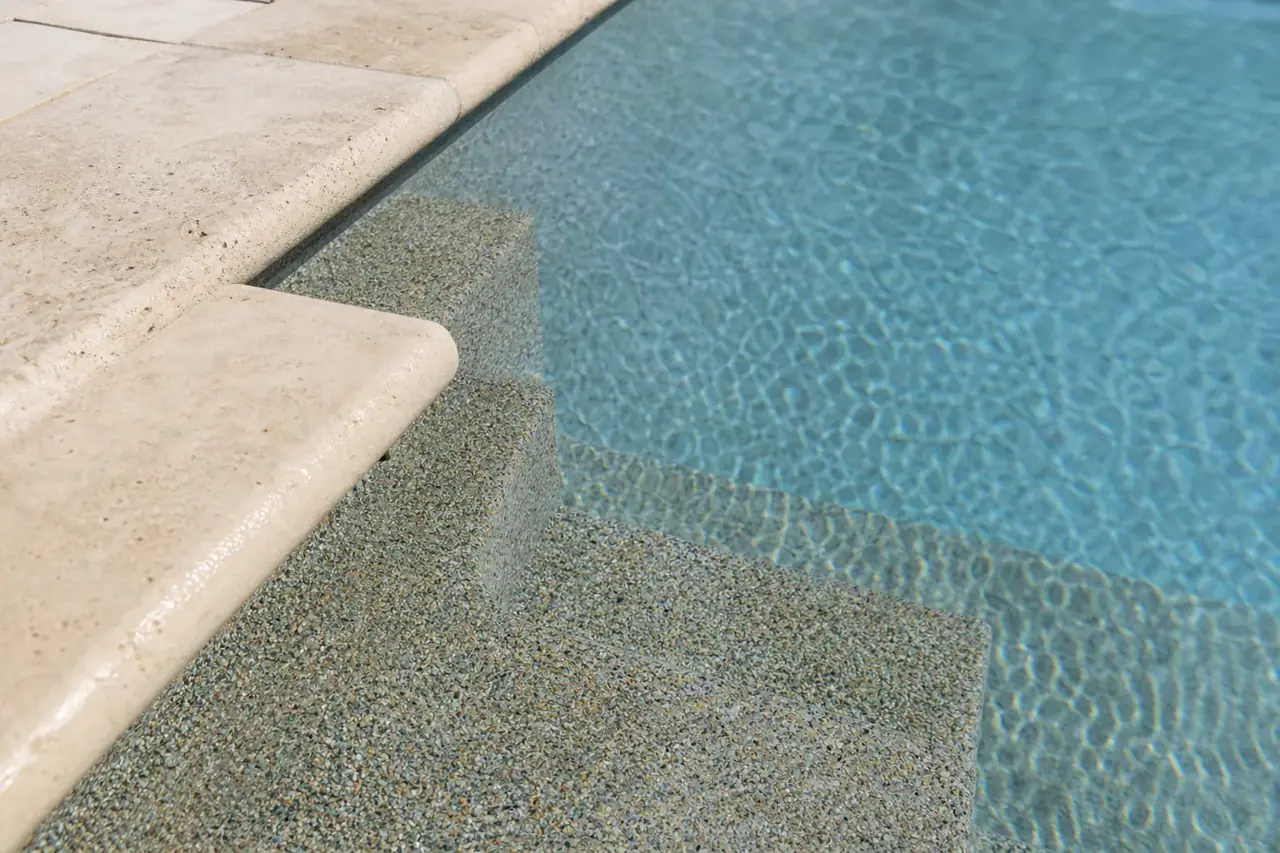
Fresh pebble plaster surface meeting travertine coping

What is included

Surface evaluation

We assess delamination, hollow spots and staining to confirm resurfacing is the right call.

Chip-out & prep

Failing material is removed, hollow areas are cut out and the shell is bond-coated for adhesion.

Plaster & quartz

Standard white plaster for value, or quartz aggregate for better stain resistance and a ten to fifteen year life.

Pebble finishes

Pebble interiors give the deepest color and the longest service life, commonly fifteen to twenty years.

Vinyl liner replacement

Field-measured liners, new gaskets and faceplates, plus foam wall padding where it helps.

Startup service

Controlled fill, brushing schedule and balanced chemistry so a new surface cures properly.

Questions

Pool Resurfacing FAQ

How much does resurfacing cost?

Replaster commonly runs $8,000 to $14,000, quartz $12,000 to $20,000, pebble $18,000 to $30,000, and vinyl liner replacement $5,500 to $9,500 depending on size.

How long does it take?

Most resurfacing projects run five to nine days including cure and fill.

How do I know it is time?

Rough or chalky plaster, spreading stains, exposed gunite, repeated chemistry problems, or a liner that wrinkles and no longer holds level water.

Which finish lasts longest?

Pebble, typically fifteen to twenty years. Quartz runs ten to fifteen. Standard plaster runs seven to ten.

Can you resurface and re-tile together?

Yes, and doing both at once is cheaper than two separate drains and mobilizations.

Can a pool be resurfaced in cold weather?

Plaster cures best between about 50 and 90 degrees, so we schedule gunite resurfacing from spring through fall. Vinyl liners can go in during cooler weather.

How long until we can swim?

Fill starts as soon as the surface is finished. Vinyl liners are swimmable in a day or two, and new plaster needs about a week of brushing and balancing first.

Will resurfacing fix my staining problem?

It resets the surface, and we identify the cause first. Metal staining from well water or a corroding heater will return unless the source is corrected.

Do you replace lights and drain covers during resurfacing?

Yes. Draining the pool is the right moment for VGB-compliant main drain covers, LED light conversion and new return fittings.

How often does a pool need resurfacing?

Plaster lasts seven to ten years, quartz ten to fifteen, pebble fifteen to twenty, and vinyl liners ten to fifteen depending on chemistry and sun exposure.

Request your free estimate

We reply the same business day.

Thanks. We have your request and will call you shortly.

By submitting you agree to be contacted about your project. No spam.

Ready to talk about your pool?

Free on-site estimate anywhere in Nassau or Suffolk County.